I have played on many sports teams during my high school
years and so I think it is safe to say I thrive on competition. When one thinks
of competition the polar opposite thought might be mathematics, well I am here
to tell you are WRONG! “Mathies” can get competitive too I have seen it first
hand and it is intense. I have experienced a number of student competitions
within the field of STEM that students can get excited about and in the same
way as a basketball tournament these competitions require practice, hard work, and
commitment from the team. The first example is the Jr. Math Challenge presented by the Hamilton-Wentworth Catholic Board.
This bi-annual event brings students in grades 4-6 together to learn and
compete in all things math. Six students from each school (2 from each grade)
are selected to represent their school at this one day tournament. In
preparation for the event teacher coaches usually practice all types of math problems
with their students. The format of the event is as follows; schools are ranked
based on their scores, scores are received from their participation in each of
the activity rooms. Some of the rooms the students participate in exercise
student mental math, problem solving, critical thinking, and collaboration
skills. Students are awarded with prizes and also have the opportunity to listen
to inspiring speakers in the field of STEM. A new similar contest has been
created for high school students. The Mohawk
Math Engineering Challenge is held at Mohawk College and has been created
for grade 9 and 10 students to encourage students to continue a path in STEM. In
its inaugural year this contest partnered with a number of sponsors to provide
amazing tech prizes for the students. Another contest present in many southern Ontario
high schools is the Waterloo Math Contest
presented by the University of Waterloo a leading university and math and
sciences. This contest is simply a test students that can write to extend their
math knowledge and their scores get ranked within their school as well as
province wide. An example of a large scale competition is any of the Robotic
meets. These are the ultimate events that combine a love for STEM and sport. In
these competitions high school teams bring their robot, which they designed and
built, to a stadium which is transformed into a playing field where their
robots are to complete a series of tasks. This is not just a show and tell
event where students show off what they have done, they need to show what they
can do by pinning their robot against others in the field and usually race to
complete the tasks. Students are on their toes at these competitions as they
are constantly making adjustments to their robots and their strategy to the
games. These competitions truly demonstrate next level intelligence in students
and they only get more impressive as you enter regional and global competitions.
There are so many opportunities for students in STEM to show her competitive
side and why not!
Tuesday, 13 February 2018

Thursday, 8 February 2018
Movie Math
One important aspect of being a math teacher is getting
students to recognize the usefulness of mathematics and possibly inspiring
students to pursue a career in STEM. One way to achieve this goal is to provide
students with positive role models in STEM they can look up to. Being a “mathie”
and a movie buff myself, I have seen a number of movies that inspire me as a mathematician
and can do the same for students in my classes. Below are some films that I can
see showing or referring to my senior classes.

This first
film is not only inspiring to students pursuing STEM but specifically to female
students. Hidden Figures is a
recent Oscar nominated film celebrating women who have made significant
contributions to math and science. The story follows African-American women
working at NASA as Mathematicians and a Physicist. These women were integral to
the success of sending the first American astronaut, John Glenn, into orbit. Although
this movie takes place in the 60’s it demonstrates the gender disparity within
the field of STEM. For female students it shows that yes there are
opportunities in this field for them and they should be confident in their own
intelligence as well as their passion that this career is for them despite
being outnumbered by males.

The Imitation Game depicts the historical events during World
War II as British intelligence agency hires mathematicians to break a Nazi
code. As much as this is a World War II movie, the focus is on the group of
mathematicians that are on the clock to build a machine that will break the
code. This movie proves the usefulness of mathematics and may intrigue students
to further investigate the world of combinatorics. The movie also provides a
strong female lead that uses her intelligence to help solve the code.
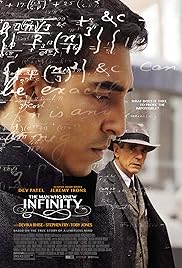 The Man Who Knew Infinity is a movie for true math people. The
plot surrounds the life of now famous mathematician Srinivasa Ramanujan, who originally travelled
from India to England to work with a professor in the math department. Ramanujan
had produced solutions to many unsolvable problems as well as providing proofs
for his own theorems. This movie demonstrates the endless possibilities of
mathematics. It would be useful to show this movie to your grade 12 students as
it explains the importance in proofs and providing information to back up your
calculations as this is what they will most likely be exposed to in university.
The Man Who Knew Infinity is a movie for true math people. The
plot surrounds the life of now famous mathematician Srinivasa Ramanujan, who originally travelled
from India to England to work with a professor in the math department. Ramanujan
had produced solutions to many unsolvable problems as well as providing proofs
for his own theorems. This movie demonstrates the endless possibilities of
mathematics. It would be useful to show this movie to your grade 12 students as
it explains the importance in proofs and providing information to back up your
calculations as this is what they will most likely be exposed to in university.

Moneyball is a light hearted film which once
again demonstrates the daily applications of mathematics. The movie is about
the general manager of the Oakland A’s Baseball team that decides to incorporate
a statistical approach to recruiting and running his team. This mathematical
approach to baseball is now being applied to many of the MLB teams today. For
students who love sport and math this movie shows that there are a vast number
of job opportunities in mathematics and there are opportunities to work in a
job that combines your passion for sport and math.
Wednesday, 7 February 2018
Money Matters

In this blog I am sending a message to all coders, app and
online game creators and website designers. I have been working with some
students in locally developed high school math classes and I have found that
there is a shortage of good engaging, interactive math games for students
working at this level. The focus for locally developed classes aside from
preparing them for the grade 11 workplace course is to develop the mathematical
skills that can transfer to crucial life skills. The most important of these skills
is financial literacy which even the Canadian government has recognized as an
important aspect of education we need to be focusing on. I was recently teaching
a grade 10 student who wanted to develop her money skills. The first and
obvious strategy I would suggest to all teachers is to use a cash register, yes
the old fashion ones we played shop with in kindergarten. The best way for
students to understand the value of money and spending is to physically
practice. During our study sessions, my student and I would work through class
homework sheets and solve written financial problems by adding and subtracting
values manually and drawing pictures. Then we would re-do the problems but this
time completely orally and using the cash registers just like in a store. The
first few times there was definitely a disconnect between the idea of written
monetary values and having the physical dollar amount in their hands but with
practice it was a seamless transition between paper and practice. This is a
great way of learning but it cannot be the only way. I found after a while the
students were tired of using money the same way for every question. I tried to
incorporate some practice using technology but getting to the root of my
problem, the online games I found sucked! All the free online games were too
simple, they repeated the questions, and they were asking students to perform
the same type of transactions. Then I would switch between games to find
different problems but most online money games showing students the coins and
bills are mostly American. Then looking into apps and computer game, the best
ones were super expensive and others were hard to find. I know school boards do
have licensing for some excellent games but how does this help the parent at
home or in the summer when they want to practice math skills with their child
without breaking the bank. Yes if you search there are good worksheets and
activities available online to engage students but for those who are more
inclined to practice with online games we are still waiting for a great Canadian
invention. One final note to add for parents, take your kids to the store with
you, not just to pick out what they like and then help you with the grocery
bags. Get your children to shop with you, look at flyers, compare prices, write
a list go to the store and do the math before you reach the checkout.
Math Online?
Hello blogosphere! I am back with a few more things to say
surrounding all beautiful things math.
My first topic of discussion is e-learning and mathematics. The shift
towards blended classrooms, flipped classrooms and online courses are most the
most predominant trends in teaching math. With that being said, there still
many people including teachers that question the delivery of course content and
student success rates from online math courses. As a student I have personally
not experienced an online math class however there have been a few variations I
have encountered as a university student and as an educator. In university some
intro calculus classes for programs other than math and science were offered
online. In these courses students were taking online quizzes, listening to
online podcast lectures and submitting assignments online. This course was run
through the university’s main online portal “Avenue To Learn” however the
course was only partially online as there was a traditional in-class portion
each week. This format also required students to write all tests, mid-terms and
exams in person on campus. This course was clearly more of a blended approach and
since the students enrolled in the course most likely did not have a strong
math background they found they should still include a traditional in class
portion. Looking at the high school level I have experienced multiple fully
online courses using the online hub “Desire to Learn”. These courses especially
during the summer are always full and the subject areas offered are usually
English, History, Geography, and some of the upper year social science courses.
I have yet to see a Mathematics course offered online and there are a few
reasons I can see why.
First, just like the university students, high school
students may require individualized attention and assistance that is best provided
in person rather than through a screen. I think in using this portal makes it
difficult as a teacher to really get to know your learners and to understand
where they are struggling. This places a lot of responsibility on the student
to advocate for their learning and make sure they send emails to their teacher
and pose questions within class forums. Some arguments have been made from
students and teachers that this online forum and others similar are difficult
to work with, confusing and overall not very user friendly. I believe this
comes down to the effort put in by the instructor. I have seen a history class
that was designed in an extremely organized fashion allowing students to follow
instructions that were very explicitly written. The site also incorporated
links to videos, webpages and other sources used to aid the lesson, all of
which were not difficult to locate later on and it did not put the students
through a maze to get back to the lesson they were working on. Again, this was
a mostly writing based course and the question remains as to whether even the most
organized and well planned sites can effectively educate students in a
mathematical sense. This brings me to my recent experience with Google Sites
and Webinars. I personally believe that in catering to all types of learners an
online mathematics course should include both an interactive face to face
component as well as individual study. Google Sites and Google classroom are
excellent bases for math classrooms. A teacher is able to engage students with
visuals, maps videos, provide links to games, blogs, and other helpful or
interesting math links. I know you can do most of this on the other portals but
having the information on a website you may be more likely to get students to
participate in readings and additional learning activities instead of looking
for what it due for the week. Using this method I think including webinars can
be a solution to connecting to your students and understanding their fears,
struggles and goals in the class. For example you can provide the link to
webinar session to be hosted once a week and students can join in to ask
questions, discuss their learning and possibly working on their problem solving
skills together as a group. As new programs continue to be created and
curriculum is developed there are endless possibilities for online learning, yes
even in math as long as there are dedicated teachers, committed learners and an
open mind.
| https://qph.ec.quoracdn.net/main-qimg-db1bf4e3b3806096cfe1e2d853a10e3d |
 |
https://www.engineering.com/Portals/0/BlogFiles/swasserman/bigstock-E-learning-slogan-poster-desig-35724818.jpg |
Sunday, 26 February 2017
Activities for Workplace Math
College math classes will bring you a variety of learners. Among them will be the students who are taking their last math class ever and they really have not patience for math. This brings your challenge as a teacher to keep these students as engaged as possible and provide as much evidence for your students on how learning math will benefit them in the future. The activities presented last class did an excellent job in achieving this. The first activity presented was a finance lesson geared toward the grade 11 MBF 3C class. This activity takes place the day after teaching the class how to calculate interest. In this activity, student groups are provided with the terms and information on different credit cards. The teacher then provides a scenario to the entire class where something is purchased and based on their information each group needs to calculate their interest and the benefits of using this credit card plan. The class then compares the results and discusses their thought on the benefits and disadvantages of credit card plans. Using actual credit card and debit plans is definitely a benefit for students as this develops life skills for everyday budgeting and banking.
The second activity was directed towards grade 12 MAP 4C class, it also developed student knowledge directly applicable to useful life skills. This activity allows students to design a house plan and make decisions based on a budget. The teacher provided a floor plan with dimensions of each room and students could choose from an array of tiles, hardwoods, carpeting, and paint colours to decorate their home. A worksheet is also provided for students to calculate the total cost of each room after they make their decisions. In class we were to choose three rooms and calculate the total cost however it was mentioned that this would make an excellent culminating assignment with a few adjustments. Some of the changes that could be made are 1)have students complete the entire floor plan 2) re-calculate some rooms using different materials and compare prices 3) Have students discuss the accuracy of their estimates i.e. some of the missing variables in the activity such as hidden costs/savings.

The second activity was directed towards grade 12 MAP 4C class, it also developed student knowledge directly applicable to useful life skills. This activity allows students to design a house plan and make decisions based on a budget. The teacher provided a floor plan with dimensions of each room and students could choose from an array of tiles, hardwoods, carpeting, and paint colours to decorate their home. A worksheet is also provided for students to calculate the total cost of each room after they make their decisions. In class we were to choose three rooms and calculate the total cost however it was mentioned that this would make an excellent culminating assignment with a few adjustments. Some of the changes that could be made are 1)have students complete the entire floor plan 2) re-calculate some rooms using different materials and compare prices 3) Have students discuss the accuracy of their estimates i.e. some of the missing variables in the activity such as hidden costs/savings.

Wednesday, 22 February 2017
Math Gamification for Senior Classes
In my last math class, my fellow teacher candidates presented lesson activities that were excellent examples of incorporating gaming aspects into the classroom. In senior classes it can be a challenge to make math fun for students but I can tell you that these two activities had an entire class of adult learners completely excited about playing games.
 The first activity presented by my colleague was "Deal or No Deal" for the Data Management course. In this activity student groups will be re-creating the Deal or No Deal game show and like the premise of the show they will calculate their probability of receiving an enticing offer from the banker. There was a lot of prep work done by the teacher. In each group is provided with a bristol board of cases, offer cards and 3 handouts for calculations, reflection questions and to outline the rules. After students chose the specified number of cases they were given an offer from the banker and the they to calculate probabilities of the having a case with a value greater than and less than the offer. Based on these probabilities students would either make a Deal or No Deal. Overall I thought this was a very fun and useful way of practicing basic probability. For future use I would try to experiment with ways I can transfer some of the game components to an online version. One way I can already see working is playing this as a class and having the case board on one PowerPoint.
 The next fun activity was a classic game of "Dominoes" and the activity was geared towards a Grade 12 Advanced Functions class so the faces on the Dominoes were Logarithms. Personally I had never played Dominoes before but it is very easy and for math people very addictive to make a match. This was an excellent way for students to practice their log laws. My colleague explained that in her class she actually used this as a warm up activity after just teaching the log laws but it can also be used later for review. Also, each time they play students can assess how they are progressing in their knowledge of log laws by tracking how much time it takes them to convert the logs to a single value. This activity can be adapted to almost every math course, instead of logs you can have equations in different forms, trig equations and angles, and solving for x.
 The first activity presented by my colleague was "Deal or No Deal" for the Data Management course. In this activity student groups will be re-creating the Deal or No Deal game show and like the premise of the show they will calculate their probability of receiving an enticing offer from the banker. There was a lot of prep work done by the teacher. In each group is provided with a bristol board of cases, offer cards and 3 handouts for calculations, reflection questions and to outline the rules. After students chose the specified number of cases they were given an offer from the banker and the they to calculate probabilities of the having a case with a value greater than and less than the offer. Based on these probabilities students would either make a Deal or No Deal. Overall I thought this was a very fun and useful way of practicing basic probability. For future use I would try to experiment with ways I can transfer some of the game components to an online version. One way I can already see working is playing this as a class and having the case board on one PowerPoint.
Thursday, 16 February 2017
Grade 11 Functions

 Grade 11 Functions is always a tough course for students whether students go from 10 academic to 11 University or 10 academic to 11 U/C the grade 11 curriculum does have a jump in the learning. Students in grade 11 will learn new/larger concepts and are required to practice through a range of application questions. One of the main new concepts in the grade 11 curriculum is exponential functions. This week one of my colleagues presented an activity to be used as an introductory lesson to exponential functions for a university level class. In this activity there were three stations created where each presented a problem that could be modeled by an exponential growth function. Being an introductory lesson the students are unaware of exponential growth applications or how exponential functions are represented. Thus students use existing mathematical knowledge and strategies to solve for the questions provided at each station. I really enjoyed the specific application questions my colleague had created for the students which were all very engaging and related to the interests of high school students. Examples included zombie apocalypse rate, ice bucket challenge and number of folds on a paper. For the first two stations, in order to solve for the number of people (infected or involed in the challenge) after x many days, there were counting chips provided. This helped the students visualize that there was a growth occurring however it was not linear or quadratic like they had already seen. The other station provided physical sheets of paper for the students to fold and record the squares created after each fold. Overall this activity was very useful as an introduction as it forced students to not only apply previous knowledge but also use critical thinking to lead them to exponential functions. Although this was created for university level class I see it also being useful in a university/college level class.
Thursday, 2 February 2017
Grade 9 Applied Lessons
 |
| CBR Motion Detector, Scientific Calculator, Graph Worksheet |
The other lesson of the night I wanted to share was a fun activity helping students solve for a variable x in an equation. To do this simple activity in your class all you need is mini whiteboards and whiteboard markers or if you don't have mini whiteboards my colleague made a creative substitution by using clear document sleeves. After placing your students in groups of 4, you provide the entire class with an equation to solve and within each group a student will begin solving by writing down the first step. After the first step is done the student will pass on the whiteboard to the next student in the group who will complete the next step. This will continue until the group has isolated for the variable. what is excellent about this activity is that students have the opportunity to learn from their peers. If a mistake is made in one of the steps the next person will hopefully catch it and help the previous person fix it. This activity can be one of those fun math days especially when you make it a competition and the first group to correctly finish the equation will get a prize. I would definitely do this in my class because it achieves the same goal as providing the students with worksheets on worksheets of equations however it adds that element of excitement.
Thursday, 26 January 2017
Grade 9& 10 Academic Lessons
Tonight was the night for geometry! Two of the three grade 9 teachers chose to teach a lesson on the sum of interior angles. Both teachers had very similar lessons but different approaches. My first colleague provided a worksheet with multiple figures and we were to to investigate how to find the sum of the interior angles for each figure. This lesson took a very openended approach, I liked how the students were given time to develop their own thoughts and strategize how they can solve the problem. The students had the support of their peers and constant support form the teacher circulating the classroom. In the end, students presented their findings to the class and we found that the class had come up with multiple strategies. I thought having the students explain to the class what they did to be very useful. Maybe the method we came up with in our group is different from another group and by learning the other groups method I better understood the concept. A worksheet was also provided during the lesson which was an excellent consolidation tool however it could have been referenced more frequently by the teacher. I feel I focused more on the problem and did not bother to summarize my findings during investigation. My other colleague's lesson was more of a teacher driven approach. He began by having us draw a triangle on a paper and draw semi-circles in each corner indicating the angles. We were then instructed to cut out our triangle and cut off the angled corners. From the corners we were asked what we notice about the corners put together and it was that they create 180 degree angle thus solidifying the concept that each triangle has a sum of 180 degrees. From here we worked on a sheet the same as the other lesson splitting up polygons into triangles and calculating the sums. Both lessons lead to the creation of the formula --->SUM =180(n-2) however one lesson was a more direct path towards this formula while the other was more of a discovery process. I think both lessons were excellent, I would use them both and when/where I use them would depend on the type of learners I have in my classroom.
Another lesson activity I thought was absolutely incredible was "Speed Dating and Equation Making" . The learning goal was for students to determine the equation of a line when given specific characteristics such as the slope and y-intercept. The activity required the class to be grouped in pairs of two and the desks were set up in a horseshoe shape so the students could rotate partners like speed dating. In each starting pair, one student was given a yellow card with information on the slope and their partner was given a purple card with information about the intercept. The objective of the activity was to put together their information, create the equation of a line and draw the line on the provided coordinate grid. Printed on the grid were hearts on specific points, if the equation they created passed through a point with a heart this would be a match. The class will rotate to all partners and in the end the winner is the person with the most matches. I found this to be very fun activity and an easy way to practice forming and drawing equation of lines. I can also see how this could be adapted to the grade 10 curriculum by having the students match quadratic equations and the hearts could possibly be placed at the vertex.
 |
| Coordinate Grid and Description Cards |
Monday, 23 January 2017
Math Lessons for Intermediate Classes
In this week's class I was reliving my days as a student in grade 7 and grade 8 math classes. My fellow teacher candidates presented some interesting lesson ideas they created from the grade 7/8 math curriculum and the following are a few ideas that really stood out to me.
One of my colleagues presented a lesson on finances and money management which is a crucial concept for real life application. For years Monopoly has been a best selling board game and not just for its addictive nature but also because it is an important educational tool. My fellow teacher candidate created a lesson which was a play on Monopoly and the learning goal for the class was to understand daily expenses and how to properly manage your budget. The teacher had placed all the students in groups of 4-5 and had assigned a profession to each group or now known as each family. With their profession, the families received a monthly income statement and were instructed to collect their money from the bank which was paper monopoly money. The teacher then advised each family that they were to pay various bills (internet, phone, rent, grocery etc.) and one bill at a time the teacher would provide the percentage that each bill would take from their paycheck and the students were to calculate the exact dollar amount. What I truly enjoyed about this activity was that at all times the students were engaged. One student from each group was in charge of distributing money, collecting money, recording transactions and/or calculations. The students were even able to have fun playing the role of their professions such as the internet company collecting money or the banker handing it out. This activity clearly made the connection between earning and spending and although we were adults playing we even forgot about certain required expenses. Thus this would be a great reality check for students and the enforce the importance of budgeting which is a crucial life skill.
The second lesson that had me intrigued had us practicing with coordinate grids and transformations of figures. The teacher created a story called "Steve the Stick Figure" and the goal at the end of the activity was to explain Steve's story based on his movements. For this activity the class was divided in 8 groups. Each group was sent to a station and at each station we were given coordinates of two points; one representing Steve's head the other his body. After plotting the coordinates and drawing the stick figure on the provided coordinate grid we were to read the transformation instructions specific to that station. For example one station said "Steve walked three blocks right and four blocks north" we then had to translate our points three units right and four units up to find the new coordinates. We then searched for the next station with starting points that matched our coordinates after transformations. This process continued through until all 8 stations were visited and the path was completed. I enjoyed this activity especially the fact that the class was moving and it resembled that of a scavenger hunt for the correct coordinates. I also like the worksheets created for the assignment; one to draw out our figures on coordinate grids, one to organize our steps and describe the transformations that happened at each station, and to consolidate the lesson with a few critical thinking questions where we had to draw conclusions from the movements recorded. Overall I found this to be an excellent lesson and although it was noted to use this near the beginning of a unit I would suggest to use this activity near the end perhaps before a test as it encompasses a lot of different concepts.
 |
| MTSOfan. (April 28th 2008)."Monopoly Justice"(Online Image). Retrieved from:[https://goo.gl/images/OVPtRX] |
The second lesson that had me intrigued had us practicing with coordinate grids and transformations of figures. The teacher created a story called "Steve the Stick Figure" and the goal at the end of the activity was to explain Steve's story based on his movements. For this activity the class was divided in 8 groups. Each group was sent to a station and at each station we were given coordinates of two points; one representing Steve's head the other his body. After plotting the coordinates and drawing the stick figure on the provided coordinate grid we were to read the transformation instructions specific to that station. For example one station said "Steve walked three blocks right and four blocks north" we then had to translate our points three units right and four units up to find the new coordinates. We then searched for the next station with starting points that matched our coordinates after transformations. This process continued through until all 8 stations were visited and the path was completed. I enjoyed this activity especially the fact that the class was moving and it resembled that of a scavenger hunt for the correct coordinates. I also like the worksheets created for the assignment; one to draw out our figures on coordinate grids, one to organize our steps and describe the transformations that happened at each station, and to consolidate the lesson with a few critical thinking questions where we had to draw conclusions from the movements recorded. Overall I found this to be an excellent lesson and although it was noted to use this near the beginning of a unit I would suggest to use this activity near the end perhaps before a test as it encompasses a lot of different concepts.
Sunday, 30 October 2016
What Would the Students Think?
This week in my class we took a focus on the student's perspective when planning a lesson. Below is a script we created showing student concerns after receiving instructions for consolidating the lesson.
Teacher: Now, instead of solving an
equation given to you, you are going to create your own equation with a partner
and you must come up with a word problem that corresponds with the equation you
create.
For example we make an equation,
29 - x= 13. One example of a corresponding word problem would be "Jenny is
on the Price is Right and the price she guessed for a new toaster was $29. The
difference between Jenny's guess and the actual retail price is $13. What is
the actual retail price?"
Then you would solve for x and
show all your steps.
Student 1: Miss,
can we use any numbers?
Teacher: Yes, in your equation any
numbers can be used and you must have one variable "x" to solve for.
Student 2: So do
you have to show all the steps when you solve or can you just write "x =
..."
Teacher: When you solve your equation,
I want to see all the steps you took to isolate or solve for x, and end by
clearly stating statement "x = value".
Student 3: Can we
do this in pairs?
Teacher: Yes groups of two only. Each
group of two will hand in one paper with one word problem, equation and
solution steps.
When planning any type of lesson or assignment, it is
important to remember that explanations or instructions you hope to provide to
the students may not be as clear and concise to them as they are to you.
Sunday, 23 October 2016
Always Time For Technology
In today's classrooms one question
teachers ask themselves when lesson planning is "How can I incorporate
technology into my lesson?" There are numerous apps and websites available
which can be used to enhance a lesson or for student aid. The challenge for
teachers is to explore these methods of technology and decide if they are
purposeful towards student learning.
One purpose technology should serve
in the classroom is to foster math talk. During our class this week we were
working with the website Desmos, more
specifically we used the feature Polygraphs.
In this feature teachers create a class account and students use their own
electronic device to login to the class game. This game is just like an
electronic version of the board game Guess
Who where students are provided with a grid of different representations
and need to guess which picture their classmate has picked. In our case we were
working on the quadratics section and were provided with multiple images of parabolas.
In order to make an educated guess the students must ask questions (through the
app) in order to eliminate the incorrect pictures. This process forced us to
practice our math language and knowledge relating to quadratics and
translations of parabolas. For example the first question a student may ask "is the parabola concave up?" If
the response is yes then the student can eliminate all parabolas facing down. I
found the game to be fun, interactive and it tested my math knowledge not only when
I was the question person but also as the person answering.
To compare
to a more traditional lesson without the use of technology, we also did an activity
called Headbanz. In this activity the
teacher presented each of us with an equation written on a card which was attached
to a headband. Without looking at our equation we were suppose to wear our headband
and ask yes or no questions to our classmates in order to identify our equation.
This activity was also excellent for fostering math talk as students needed to
clearly explain their thinking in order to describe their equation. Both these
games are great for the "Minds On" portion of a lesson as they get
the students into the math mindset and prepare them to think critically. I'm
sure positives and negatives can be described for both methods however I would
not designate one activity to be better than the other since they both accomplish
the same goal.
 |
| Class having fun with Headbanz |
Another purpose for technology in
the classroom is to make it easier for students to apply their knowledge to
real life scenarios. Using Geogebra
we were able to overlay a parabola on top of a freeze frame video of a man
shooting a basketball towards the net. From the students perspective we were able
to see what would happen to our graph as we manipulated different parts of the
equation in order to match up with the path of the ball. I enjoyed this
activity so much that for my next lesson plan I will have my students find
their our picture or video of something that resembles a parabolic curve and
have them come up with the equation of the curve using the tools in Geogebra.
 |
Retrieved from: http://blog.mrmeyer.com/wp-content/uploads/160323_1lo.png
|
Tuesday, 11 October 2016
Closing the Gap
Without question teachers should be prepared to teach to a
class that has a range of learning levels however a classroom such as this is a
constant challenge for teachers. In regards to math teachers, this challenge
arises most often in grades 6-9 where each new concept heavily relies on the
use of prior knowledge. Imagine teaching area and surface area formulas in a
grade 8 class where a group of your students do not know the proper order of
operations (BEDMAS) or do not know how to perform basic operations without the
use of a calculator. This would be very difficult to teach to the entire class when
a large learning gap exists between these students and students who can apply
the new formulas to problems involving critical thinking. The goal of the
teacher is narrow the gap and one method of differentiated instruction used is
available through EduGains called "Gap Closing Resources". These
resources include topic specific diagnostic tests which can help teachers
pinpoint what concepts students are stuck on. Once a problem area is identified
there are extra work sheets for the student to practice. I have personally
worked with these resource sheets in a grade 7 math class. In a class of 26
students there were 5 students who were using Gap closing worksheets. After the
teacher had taught the lesson the 5 students would work on problems in their
Gap Closing booklet which were related to the lesson. They were required by the
teacher to finish those questions before attempting the questions from the
textbook or work book assigned that were assigned to the entire class. I
believe these booklets do help, most of the students I worked with were making
the same mistakes and after practicing questions in the booklet they were able
to understand where they were going wrong and as a result they caught up to the
rest of the class.
To assess just how wide the learning gap is in the
classroom, teachers can incorporate a variety of websites and apps into a
pre-lesson or pre-unit "warm up" as opposed to a traditional test of
existing knowledge. In my class this week we explored a website called
"Which One Doesn't Belong" where four pictures within a similar
category are shown together and students must describe how and why one picture
is unlike the rest. The website organizes the pictures into the sections; Shapes,
Numbers and Graphs and each section has pictures that range in grade level. I
think a great idea for teachers would be to combine the concept of this website
with a Kahoot presentation. Not only can teachers use the pictures from wodb,
they can create many similar questions focusing on the same specific
mathematical concept. By using this anonymous forum, students may feel more
relaxed and inclined to answer honestly instead of guessing or not answering on
regular tests. Also by customizing their own Kahoot, teachers should be able to
get a general idea of the knowledge gap in their classroom. In the end this
teaching strategy would not be a loss because for students who are struggling
this exercise could possibly help them better understand a concept and for
students who are excelling this is a great way to review and strengthen their
skills before moving on to a new unit.

References:
Gap Closing. (2016). Edugains.ca. Retrieved 11 October 2016, from http://www.edugains.ca/newsite/math/gap_closing.html
Which One Doesn't Belong. (2016). Wodb.ca. Retrieved 11 October 2016, from http://wodb.ca/shapes.html
Kahoot!. (2016). Kahoot.it. Retrieved 11 October 2016, from https://kahoot.it/#/
Image:
Learning Gap. (2016). Retrieved from https://www.quora.com/I-always-hear-people-advising-JEE-aspirants-to-get-their-concepts-cleared-But-how-do-we-get-clear-concepts
Monday, 3 October 2016
Open Question, Open Mind
 |
| Image 1 |
The one thing about math I have always taken solace in is
the fact that there is one answer. That one answer poses a challenge that I
feel I have to meet. It is just like reading a book, doing a puzzle or even
watching a movie I need to see it all come to one concrete end. Conversely to
these thoughts, I have also learned that math is not always straight forward,
it can be messy and complicated with multiple answers or there are those questions
that remain unanswered. Of course I still love the straight forward questions
but as I continue my work in mathematics, now through a teaching lens, I
realize that the real learning took place while working on the "messy"
questions. In order for students to work on these types of questions teachers
need to develop confident, independent and critical thinking in their students.
One way to gradually develop these skills is to implement open ended questions
in a lesson plan. I can tell you that at first trying to use open ended
questions in math is not as easy as english for example, but with practice it
becomes second nature. In my teaching mathematics class this week we discussed some
common and effective examples of open questions. Questions that leave a lot of
room for student interpretation are comparison questions; asking students how a
figure or an equation compares to another. Another key point we discussed was
how teachers should provide enough information to form a problem but not too
much information to completely restrict the question. Using words such as
"approximately", "minimum" or "maximum" can open
the question to multiple solutions. Below are two examples of open questions
where the approach was providing the answer and having the students work
backward to formulate the questions.
 |
| Image 2 |
 |
| Image 3 |
In one
of my placements during my undergrad, I taught the unit on area and perimeter to
the grade 7 class. One assignment I gave to the class was similar to one of the
unit problems from the textbook however I tweaked it making it more of an open
ended problem. The students were required to create a patio design under some restrictions
including using only the five specific shapes. (Prior to completing the problem
I had marked out the five shapes on the floor using tape and the students
calculated the area by measuring the floor tiles.) In the end each student had
submitted a completely unique patio design. As long as the design included the five
shapes and met the minimum area requirements then each of the designs were 100%
correct. I think this assignment was a good balance between open ended and
closed questions. After asking the students to formulate their own solutions to
the design, I then asked all of them the same closed questions which they had
to answer in relation to their own individual design area. I believe problems such
as these are beneficial to all students because at the very least everyone can
make an attempt and as I mentioned before this is a step towards building their
confidence when dealing with math.
 |
| Patio Problem |
Resources
Image 1 Retrieved from: https://s-media-cache ak0.pinimg.com/564x/11/0b/93/110b9301f2edcbad7f7c7dc959dcd19f.jpg
Image 2 Retrieved from: https://blogger.googleusercontent.com/img/b/R29vZ2xl/AVvXsEjKbl0cmVgE7Pu7Rh6EMqmxtk4gk1rzRcyppG2o7h1UvTjFA-enDAPj_7cd8dLWN66ebNiFOvJaiyfjHCrjWtkGN64BfrPz07HWETAK1yNxzyMiwZwhzHnbvpeZ2yzYDxSM-UPgcot888r6/s1600/Maths_Challenge_2.png
Image 3 Retrieved from: https://s-media-cache-ak0.pinimg.com/564x/07/73/df/0773df99e143cf484de58669a140ff51.jpg
Sunday, 25 September 2016
My Many Manipulative Thoughts
 |
| Geometric Containers can be filled with water, rice etc. |
 |
| Ropes and Ruler for tying knots activity |
 |
| Algebra Tiles |
 |
| Word Cards |
Below
I have attached a link to an article titled "Why Teach Mathematics with Manipulatives?". I believe the
article does an excellent job arguing why manipulatives are critical in the
classroom and it clearly explains that through the use of manipulatives
students facilitate their learning by making the strange become familiar.
Sunday, 18 September 2016
Just Keep Thinking, Just Keep Thinking!
 |
| Retrieved from https://pbs.twimg.com/profile_images/602027362247516160/mc_7Jfjv.jpg |
This week in my "Teaching in Mathematics" class
we focused on a student's ability and process in problem solving. Problem
solving
questions are most often the hardest questions for student to complete
and/or understand. The most common phrases from students during problem solving
are "I don't get it!", "What are we doing!", "What's
the answer!" and the worst one "I give up!". My teacher
presented us with "Skyscraper" math problems and let me tell you, the
atmosphere in our classroom full of adult Teacher Candidates was not much
different from a class full of students. To give a brief summary of the
Skyscraper problem, the students are given a handout with a square grid (can be
2x2 and up) and on the sides of the grid each square is labeled with a number
as pictured here in this 4x4 example:
 |
| Retrieved from https://solvemymaths.files.wordpress.com/2015/01/ss.png |
 |
| Retrieved from https://solvemymaths.files.wordpress.com/2015/01/ss1.png |
We were given linking cubes by our teacher and were
instructed to find the number of cubes needed on each square in order to
represent the numbers on the side of the square. Huh? Exactly my thoughts! Well
our only clue was that this problem is similar to Sudoku puzzles where a single
number can only be represented once in each row and column. Our group started
to build our towers for each square and right away I noticed our different approaches
to solving this problem. I had taken the blocks and built the required number
of buildings to fill the grid. Based on the Sudoku clue I knew that for a 4x4
grid we needed 4 buildings of each height (4 cubes tall, 3 cubes, 2 cubes, 1
cube). I needed to see what we were working with before I made decisions about where
to place these buildings where as my group members were placing cubes right on
the grid linking new heights and taking cubes away as they filled the grid. Once
our group had reached the point of frustration, we asked our teacher for help
and she explained that we should be looking to count the number of "pop
out" cubes from the top. We attempted from this perspective for a while
with no progress. In the end we did solve the problem by taking on a different
view and counting the visible faces of the cubes. Once we knew the key to this
puzzle we jumped from the 3x3 grid straight to the 5x5 and by applying our accrued
knowledge completed it with ease. Now that we fully understood the problem we
also realized that we could add one block to each building and have the same
correct answer.
The same
process and results can be seen in any problem solving situation, the goal for
us teachers to is change the negative phrases I mentioned earlier to more
positive and hopeful questions such as "What can I do next?",
"What would happen if..?". The issue we should be focusing on is not
that the student is struggling; it is how they react and overcome the struggle.
My university math professor would say to us "struggle is good" and
we would all laugh and possibly cry at the thought of working through some of
those calculus problems but in the end I know that he was right. Whenever I had
a question I found impossible, it challenged me to think creatively, try new
things and not give up. Also for the people reading this saying "I
hate math I would have given up eventually" rest assured I did not
solve all of those impossible questions and I did get the answer from my
friends or the professor but it was because of my initial struggle and failed
attempts that I understood the
problem and the solution. Know that this can be applied to any subject or any
problem in general. Before students give up or are told the answer they
continue to learn as long as they make an attempt, success or fail they are
gaining understanding through experience. This message I am sending is deeply
related to the Constructivist Learning Theory in which "the core idea is
that learners actively construct their own understandings, rather than absorb
what they are told or copy what someone shows them" (The Problem-Solving Cycle: Professional Development for
Middle School Mathematics Teachers The Facilitator’s Guide, 2003).
This week I leave you with this video that explains
the answers are never easy, we have to grow in our experiences and whether it
is in something you hate or something you love it is possible for everyone
learn.
References:
The Problem-Solving Cycle: Professional Development for
Middle School Mathematics Teachers The Facilitator’s Guide. (2003) (1st ed.).
Retrieved from
http://www.colorado.edu/education/staar/documents/FacilitatorsGuide.pdf
Khan Academy,. (2014). You Can Learn Anything. Retrieved from https://www.youtube.com/watch?v=JC82Il2cjqA
Wednesday, 14 September 2016
Bring On the Blogs!
Hi there blogosphere and welcome!
My name is Stefanie
DiSimoni I am a Teacher Candidate at Brock University and I am a "Mathemaddict"! I truly
love math and hope to spread the love to students, teachers and parents through
this portal. In this blog I will be posting everything related to math that I
find exciting and/or awe-inspiring. I
also will be posting my opinion on teaching certain topics in math and I will
share my experiences with math in the classroom.
 |
| Retrieved From:https://blogger.googleusercontent.com/img/b/R29vZ2xl/AVvXsEjTTuQnC2CmYIWp8si8r1zlSTTjuzHvSQpIITR33jTfWWYwlSY0YTCt5Va2aa3CGSokrh3ImAVjlixsC8cWMzG6iPwy0vLVBZg2xb5CKPqZy0eDzHE-d2hO5oYEaegDdw7Z-KWEgJ6pncOl/s1600/math+heart.png |
Subscribe to:
Posts (Atom)